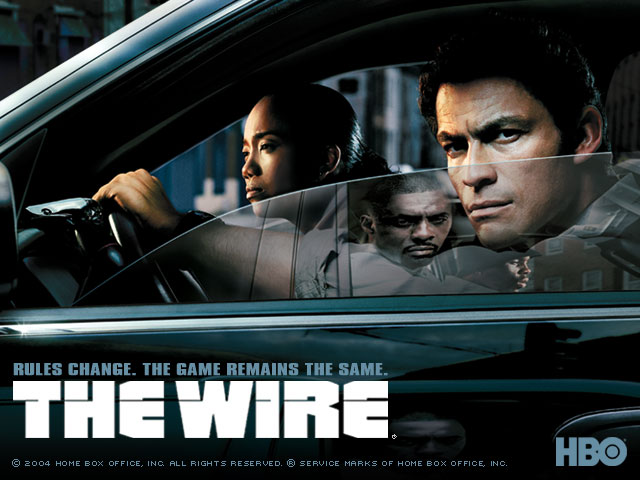
The Wire is a dramatic television series from HBO that ran from 2002 through 2008 for a total of five seasons. The series mainly focuses on the Baltimore drug scene in modern times, and the multitude of institutions it affects, chiefly the Baltimore police department. The storyline follows the happenings of high-level drug dealers around housing projects in West Baltimore, as well as the inner-workings of the police department, and the unit that is attempting to convict the dealers. What’s unique about The Wire is that whereas most television series (especially ‘cop shows’) have an obvious protagonist and antagonist, it is unclear how to classify these characters. It’s difficult to judge the morals of any one character in particular, because characters on both sides commonly do things that are wrong, sometimes heinous, but the viewer is left with an understanding of their motivations and intentions. In addition to an intricate moral structure, there is also not really any main character but rather many regular ones. This vast group of highly complex characters who all act purely in self-interest add a sense of realism and empathy to the show.
Another thing that is
unique to The Wire is that creator David Simon had a purpose in
making the series; he wanted to
illustrate clearly that the war on drugs is catastrophic. It affects
almost every governmental institution,
and Americans in general, in a negative way. The first season, and
throughout the entire series, the show
focuses on the effect it has on the police department. However, each
of the other seasons have a
specific feel, and loosely focus on a particular institution. In
season two, it’s the docks’ labor union.
Season three: politics – season four: the education system – and
finally, season five: the media, specifically The
Baltimore Sun. The viewer is provided with a unique vantage of the
war on drugs’ effect on
policemen, dock workers, politicians, students, teachers, reporters,
and regular citizens. The Wire regularly focuses
on political hierarchy and the police department’s chain of
command, emphasizing the presence of
corruption, nepotism, and tokenism. Many times throughout the show,
the department’s needs are
not met because politicians deny them permission or resources.
Everyone has someone to answer to. The
mayor tells the chief of police what to do, he tells the director of
operations what to do, he tells the
head of each division what to do, and so on. Men with power routinely
coerce subordinates. Friends and
family of the higher-up are practically infallible. There are some
characters who attempt to break the
chain of command and they are usually punished for it. This
structural theme is present throughout the
entire series.
The Wire and HBO’s Game
of Thrones are akin in this, and several other aspects. Both shows emphasize political power
and structure, and the effects these institutions have on common
people. While nepotism is a minor
theme in The Wire, it’s integral to Game of Thrones. Both are
dramatic television series whose
main focus is political structure, corruption, and power.

No comments:
Post a Comment