Wednesday, April 29, 2015

Game of Thrones


      Game of Thrones is HBO's successful hit medieval-fantasy themed show. It has an immersive storyline that stretches out all across its fictional land of Westeros and a place called, “The Wall,” which separates a land called “The North,” and its “free people,” oh, and which technically is home to “frost zombies.” But, focusing on Westeros, we find the show to center on many characters, whose destinies all intertwine with each other. In its land, there is a a throne called “The Iron Throne,” which, whomever owns it, is the king of Westeros.
     From the beginning of the series, the show heavily focuses on a noble family named “The Starks,” and another one named, “The Lanisters,” whose one of their daughters married the king of Westeros. Now, without giving spoilers, We find these two families to clash against one another, but The Starks are also on good terms with the King, so there can only be some “snickering” between the two for now. The show also focuses on a woman by the name of Daenerys Targaryen, who was daughter of the previous king of Westeros, who was known as “The Mad King,” and was slayed due to his abuse upon the people. However, Daenerys's brother, wanting to be king of Westeros, arranges for his sister to marry into the Dothraki tribe, for power over his large army to take back “The Iron Throne.” Later on in the series, the show takes its viewers on a fascinating journey, meeting new characters and, perhaps--POSSIBLE SPOILER--saying goodbye to old ones.  For all the chatters that float among politics in the show and among the striving notabilities, audiences already fans of Game of Thrones may also find amiable similarities in the show Gossip Girl.


Tuesday, April 28, 2015

The Sopranos


     The Sopranos is a dramatic television series produced by HBO, airing from 1999 through 2007. It follows the day-to-day experiences of fictional mobster anti-hero Tony Soprano as well as his associates and his family in North Jersey. Early on in the series Tony suffers from a panic attack. His physician and his wife recommend that he seek psychiatric help, and he does. From this point on the series’ focus shifts back and forth between Tony’s experiences and his therapy sessions. The show gradually introduces underlying causes for Tony’s anxiety, the most notable being his parents. While Tony’s dad has been dead for many years, he had a profound impact on Tony as a child, and eventually goes on to introduce him into the mafia. The viewer is able to recognize this in the form of traumatic flashbacks, as well as characters discussing past events. Tony’s mother, Livia Soprano, has psychological problems of her own. Although her disorder is unclear, Tony’s therapist speculates that she is likely to suffer from borderline (or narcissistic) personality disorder. She is a miserable woman whose only pleasure in life seems result from inflicting hardships upon others, especially Tony. After Tony places her in a nursing home, Livia vengefully manipulates her brother-in-law (Junior Soprano, the new head of the mafia) to put a hit out on her own son. And so, the main cause of Tony’s anxiety can likely be attributed to his parents.

Although the show mostly would be considered a psychological drama, there are many other aspects to it. It follows the criminal activities of Cosa Nostra members and associates. In this regard it can at times be thrilling and suspenseful. And while it is usually dramatic, there is a ton of comic relief. Characters regularly make lewd jokes to, or about, each other and in reference to others. In addition, the viewer will find humor in some character’s incompetence or foolishness, particularly in their malapropisms and ridiculous mishaps.

Fans of The Sopranos are likely to be inclined toward The Wire. The two shows share many similarities. Both are dramatic television series produced by HBO that are centered on crime, but have many overarching themes. They are both commentaries on contemporary American lifestyle, emphasizing societal problems. Both are meant to be taken seriously, but are riddled with politically incorrect dark humor.  


The Originals


     The Originals centers on Niklaus Mikaelson and his siblings who are known as the Original Family of vampires, as they struggle to reclaim the city they helped build known as the French Quarter of New Orleans.. After being chased from New Orleans by their tyrannical father Mikael, Klaus, Elijah and Rebekah return nearly a century later to find Marcel, Klaus's protégé and Rebekah's former lover, has crowned himself the new King in their absence. As Klaus has returned after many years, his ego has provoked him to become the king of the city. "Every King needs an heir," says Klaus, when accepting his unborn child. The child is a first to be born to a hybrid (part vampire, part werewolf) and a werewolf. Klaus must now take up with his old friend Marcel and try to steal the kingdom of New Orleans. The originals must fight vampires, werewolves, witches, and humans to ensure a safe arrival for his beautiful miracle baby. With all its magic and mysticism, viewers may find the show "Doctor Who" to be very enjoyable in a similar aspect, the only difference? Aliens...every explanation goes to aliens.


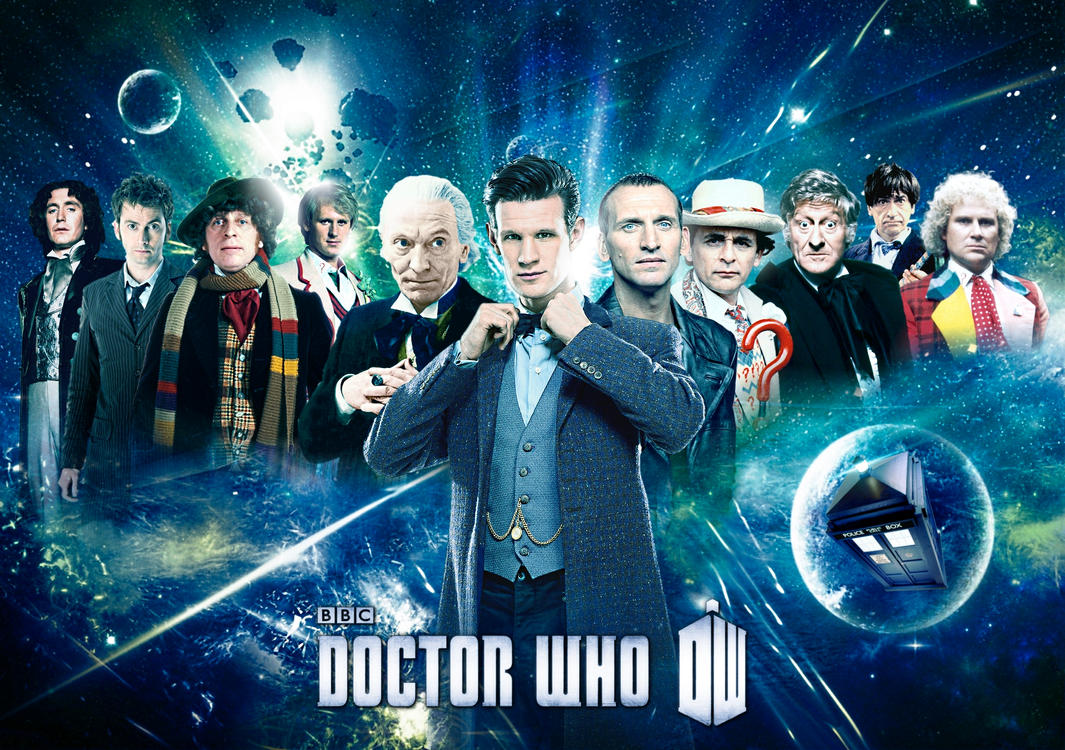
Doctor Who


     Doctor Who is a science-fiction themed show that centers on its protagonist “Doctor Who,” a time-traveling being, "time-lord," from an alien species called the gallifreyans. In the show, time lords are one of the oldest alien races in the entire universe, they have tremendous knowledge of time and space. However, not to give away spoilers, but they are a race long gone from the present time. Doctor Who is considered the last of his kind, for he is apparently the cause of his race's disappearance due to a war that raged on between his people and a species called the “Darleks,” which is a race that only wants to obliterate anything that isn't a darlek; it's a very long and intricate, but interesting back story. 
     Going back to the “Doctor,” he is the only one known in the universe to be in possession of a T.A.R.D.I.S. (Time and Relative Dimensions in Space), a time machine. From guilt of being the apparent cause of the lost of his race, Doctor Who travels through all of time and space, defending the good, especially those on Earth, one of his favorite planets. The Doctor is also a very lonely being, he ages slowly, and when he's about to die, he is able to regenerate, which transforms his body into a new and healthier one, but his race is only allowed twelve regeneration. So, along his journey, being the lonely travelers he is, The Doctor meets companions who join him in his quest of expanding knowledge and defending justice.  Also, on a last note, considering that the beings that the Doctor meets, and especially the antagonists, a lot of them happen to be family related, viewers may find a similar branch in enjoying the show The Sopranos.


Gossip Girl


    Gossip Girl, a ruthless and mysterious blogger reveals secrets about teens in upper east side New York. With roller coaster romances and piles of secrets hiding away for Gossip Girl to find, this show is sure to bring the upper east side and its drama into our lives. Blair Waldorf is a self described schemer, who's future is mapped out. Serena Van Der Woodsen is her social, beautiful best friend. Throughout the show the two engage in conflicts and reconciliations. Nate Archibald is the dashing and the group's most eligible bachelor. Chuck Bass is a rich and arrogant person who is also the manipulative son of a powerful father. Take a dip in the life of luxury. The drama in an upscale society isn't too far from what can be considered similar to the families of notabilities' drama in the Game of Thrones show, just in a medieval times era.


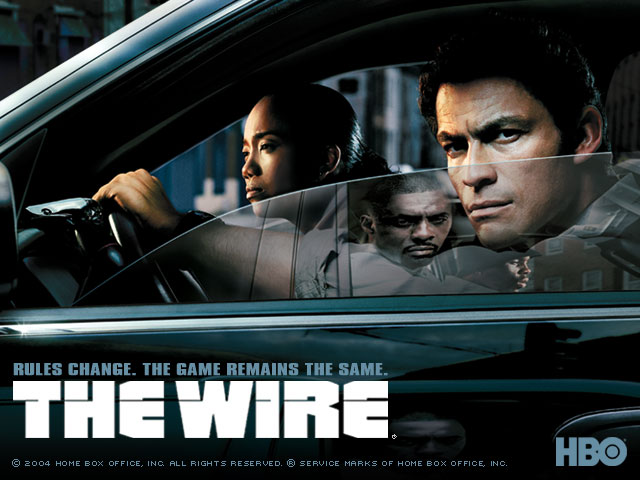
The Wire


     The Wire is a dramatic television series from HBO that ran from 2002 through 2008 for a total of five seasons. The series mainly focuses on the Baltimore drug scene in modern times, and the multitude of institutions it affects, chiefly the Baltimore police department. The storyline follows the happenings of high-level drug dealers around housing projects in West Baltimore, as well as the inner-workings of the police department, and the unit that is attempting to convict the dealers. What’s unique about The Wire is that whereas most television series (especially ‘cop shows’) have an obvious protagonist and antagonist, it is unclear how to classify these characters. It’s difficult to judge the morals of any one character in particular, because characters on both sides commonly do things that are wrong, sometimes heinous, but the viewer is left with an understanding of their motivations and intentions. In addition to an intricate moral structure, there is also not really any main character but rather many regular ones. This vast group of highly complex characters who all act purely in self-interest add a sense of realism and empathy to the show.

Another thing that is unique to The Wire is that creator David Simon had a purpose in making the series; he wanted to illustrate clearly that the war on drugs is catastrophic. It affects almost every governmental institution, and Americans in general, in a negative way. The first season, and throughout the entire series, the show focuses on the effect it has on the police department. However, each of the other seasons have a specific feel, and loosely focus on a particular institution. In season two, it’s the docks’ labor union. Season three: politics – season four: the education system – and finally, season five: the media, specifically The Baltimore Sun. The viewer is provided with a unique vantage of the war on drugs’ effect on policemen, dock workers, politicians, students, teachers, reporters, and regular citizens. The Wire regularly focuses on political hierarchy and the police department’s chain of command, emphasizing the presence of corruption, nepotism, and tokenism. Many times throughout the show, the department’s needs are not met because politicians deny them permission or resources. Everyone has someone to answer to. The mayor tells the chief of police what to do, he tells the director of operations what to do, he tells the head of each division what to do, and so on. Men with power routinely coerce subordinates. Friends and family of the higher-up are practically infallible. There are some characters who attempt to break the chain of command and they are usually punished for it. This structural theme is present throughout the entire series.

The Wire and HBO’s Game of Thrones are akin in this, and several other aspects. Both shows emphasize political power and structure, and the effects these institutions have on common people. While nepotism is a minor theme in The Wire, it’s integral to Game of Thrones. Both are dramatic television series whose main focus is political structure, corruption, and power.